How Are BC Local Governments Planning and Delivering Capital?
Survey results from 54 local governments reveal common strengths in capital budgeting — and a staffing crunch that’s limiting what those processes can deliver.
We asked members about their experience developing and delivering capital plans and budgets. Fifty-four local governments responded, representing a diverse cross-section of community types. The results paint a clear and consistent picture: most local governments have sound budgeting processes in place, but systemic resource constraints limit what those processes can actually deliver.
Strong Processes, Weak Inputs
More than half of respondents (56%) say they have a clear process for developing their capital budget, and 50% report effective council engagement. These are genuine strengths. But nearly the same proportion (48%) say they lack the data quality needed to inform good decisions, and 44% have no clear method for establishing priorities. The machinery is there — what’s missing are the raw materials: reliable asset data, structured prioritization frameworks, and the staff time to pull it all together.
56% have a clear capital budget process — but 48% lack the data quality to inform it.
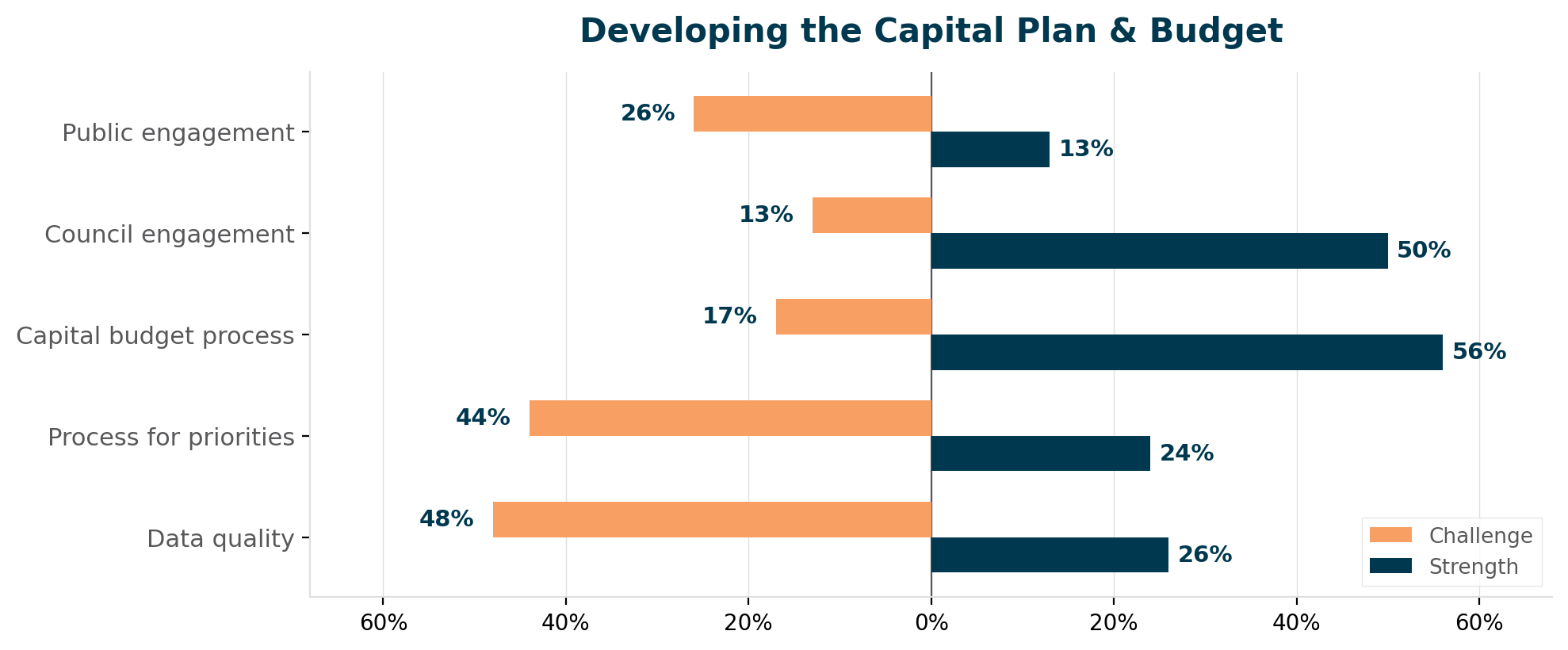
Figure 1: Self-reported strengths vs. challenges in developing the capital plan (% of respondents)
The Staffing Challenge Dominates Delivery
When we shift from planning to delivery, one finding stands out: 74% of respondents cite insufficient internal staff capacity as a barrier. This isn’t confined to any one type of local government; cities, districts, and regional districts all flagged it. Meanwhile, the areas where members report strength — procurement (54%), project management (43%), and attracting contractors (39%) — suggest that once projects are resourced and moving, local governments generally execute well. The bottleneck is getting projects from plan to active status, even though everyone is already stretched thin.
74% identify insufficient staff capacity as a delivery barrier.
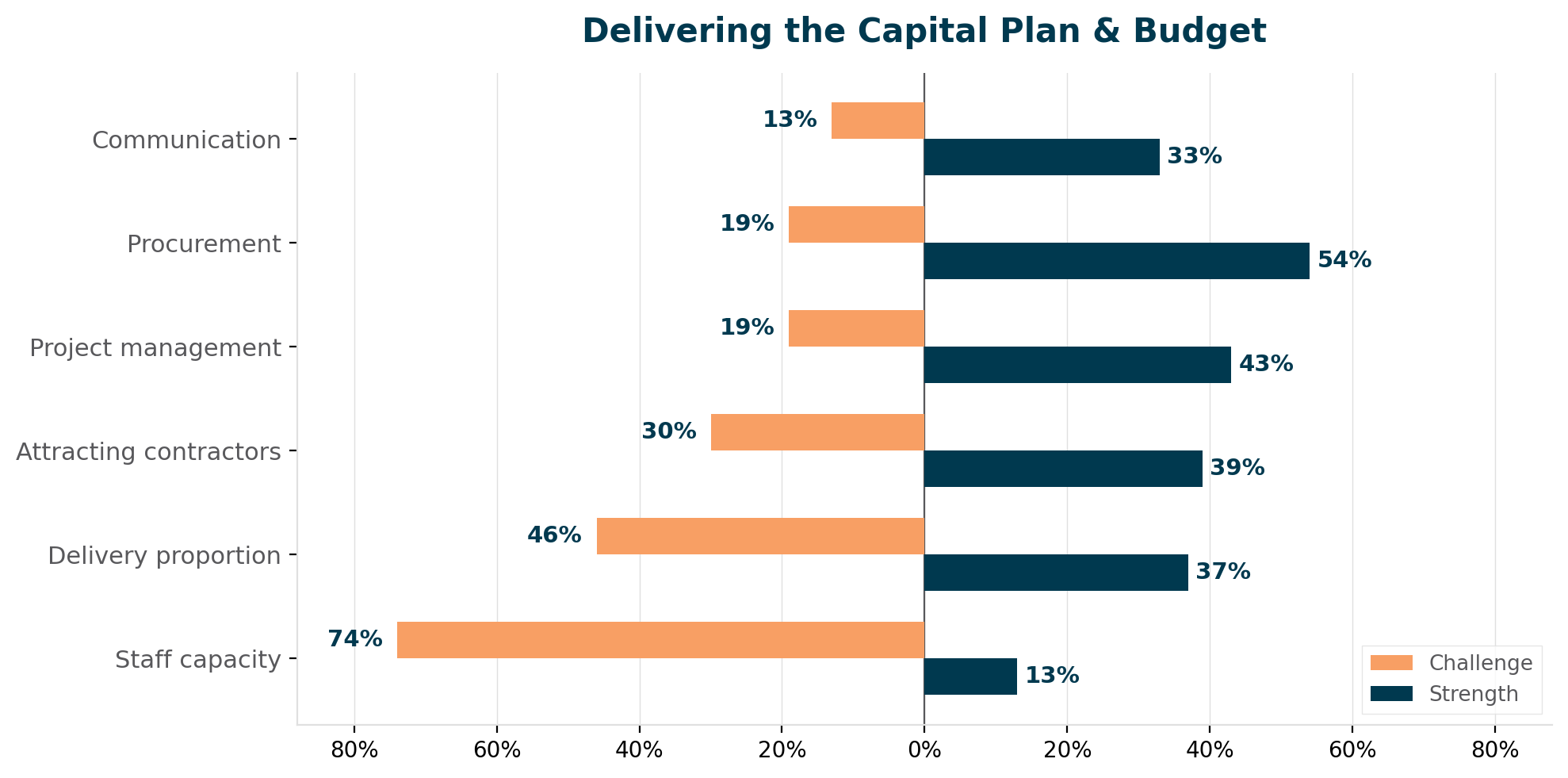
Figure 2: Self-reported strengths vs. challenges in delivering the capital plan (% of respondents)
What’s Getting Delivered — and How It’s Funded
Just over one in three respondents (37%) reported delivering 70% or more of their annual capital budget over the past five years. Nearly 30% fall within the 55–70% range, while 24% fall below 55%, and another 9% are unsure. On the funding side, financial reserves and grants or transfers are rated as most useful, both averaging 3.8 out of 5. Development charges score lowest at 2.1. Several respondents shared approaches worth a closer look: internal borrowing between reserves, multi-year fee bylaws linked directly to asset renewal plans, and partnerships with First Nations — strategies that reflect the range of tools BC communities are actually using.
Reserves and grants both rate 3.8 out of 5 as funding tools. Development charges score just 2.1 — potentially reflecting the reality of smaller local governments.
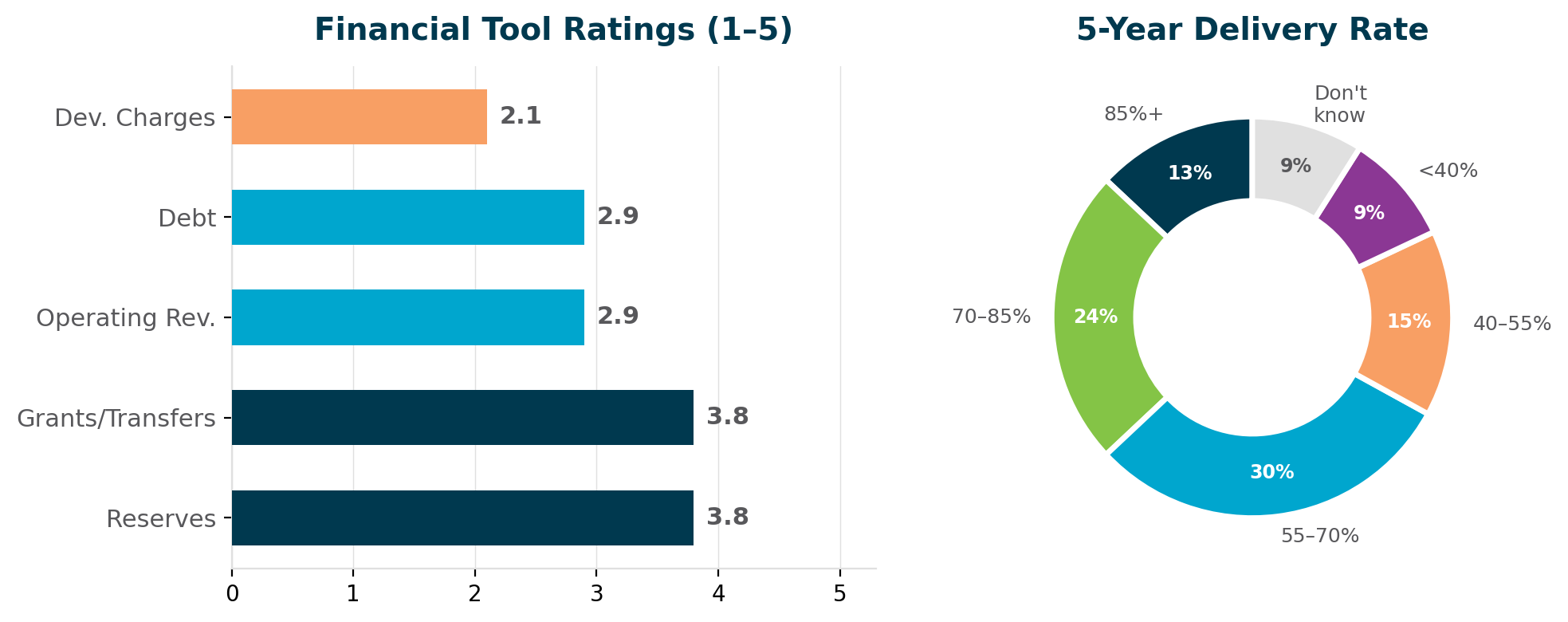
Figure 3: Financial tool ratings (left) and five-year average capital delivery rate (right)
The open-ended responses reinforce a consistent theme: local governments know what needs to be done but face a fundamental tension between aging infrastructure and limited revenue tools. Several respondents noted that without senior government grants, they cannot maintain capital infrastructure, given their tax base. Others pointed to inflation eroding project budgets between planning and procurement. These are shared challenges, and exactly the kind of practical problems where member-to-member knowledge sharing can make a real difference. If your organization has found approaches that work, we’d encourage you to share them on the GFOABC forum.